A suit is one of the easiest items in the wardrobe to settle for. When buying ready to wear clothes, the size chart says 48 and 50. When trying them on, if there is a slight difference in shoulder width and sleeve length, the salesperson will say “just change it”; When doing customization, the body stylist measures more than twenty pieces of data around you, but the quote is several times that of ready to wear clothing. So the question arises: What is the difference between handmade custom-made suits and ready to wear suits? What did the extra money buy?
This article does not discuss mysticism, only breaks down the differences between the two and explains them clearly, while also listing the pitfalls that each is prone to.
1.clarify the concept
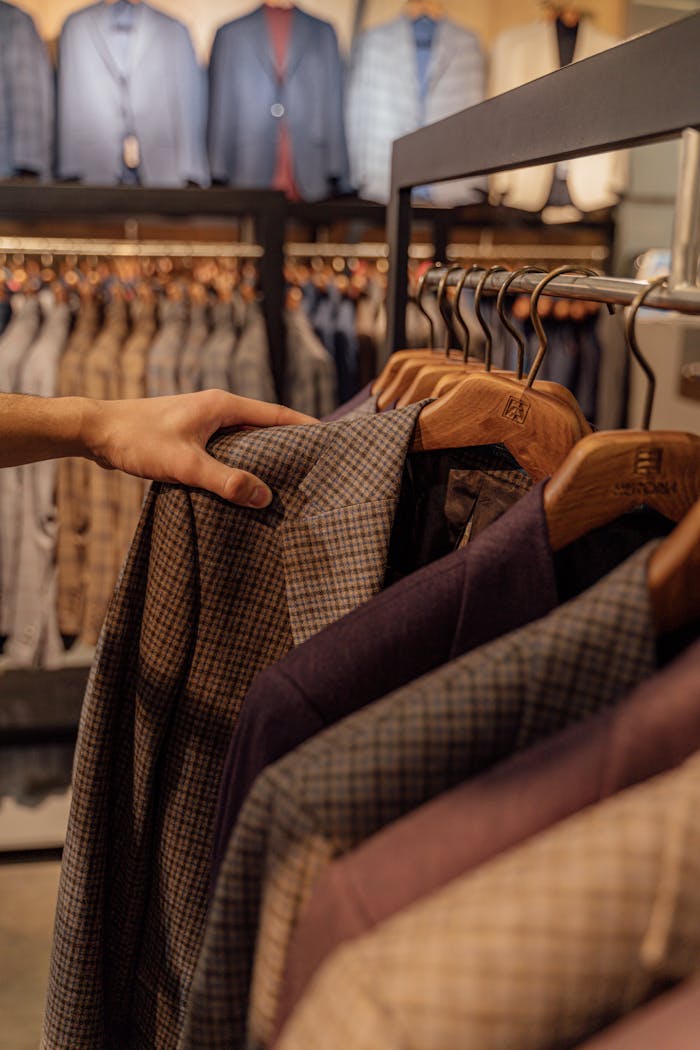
Ready to wear suits are finished products produced in bulk according to standard sizes. You pick a piece from the hanger that is close to your body shape, and then make partial modifications such as sleeve length and pants length. Its logic is to ‘let people adapt clothes’.
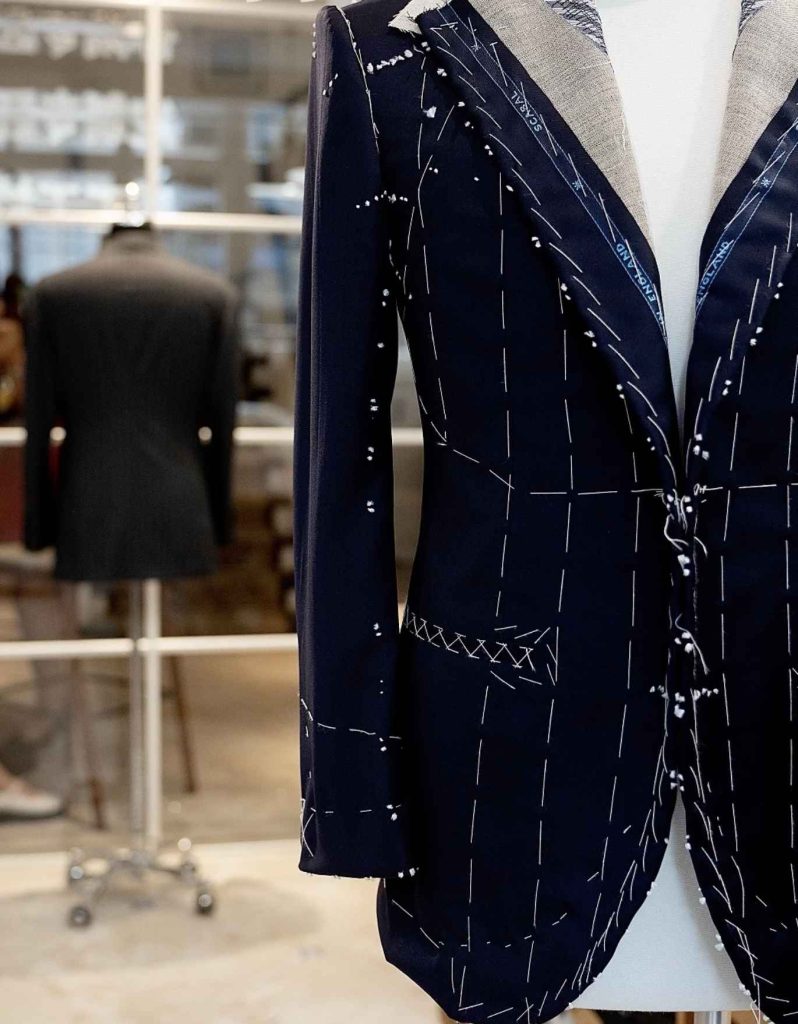
Handmade customized suits are measured first, then individually made and cut and sewn. The common practices in the industry can be divided into two categories: one is semi customization, which adjusts the paper pattern according to personal data based on the existing pattern; Another type is true full customization, independent plate making, with one or more semi-finished product trials in between. Its logic is to ‘let clothes fit people’.
It should be noted that there is currently no unified mandatory definition for the four words’ handmade customization ‘. Some workshops do retain manual processes such as receiving the collar, locking the eye, and adding sleeves, while others only modify the finished garment and crown it under the name of “customization”. So when judging the value of a customized suit, it’s not just about the sign, but also about the process and craftsmanship details.
2.The sources of fit are different
The fit of ready to wear clothing depends on “touching” – hitting a pattern with similar shoulder width, chest circumference, and back length. Shoulder line is the most difficult part to change in ready to wear clothing, because changing the shoulder is equivalent to dismantling half of the garment, and most brands are unwilling to do it, and the cost is also high. So many people wear ready-made clothes, and their shoulders are always a little empty or tight.
The fit of handmade customized suits depends on calculation. When measuring body size, shoulder width, chest circumference, waist circumference, hip circumference, back length, arm length, neck circumference will be recorded, as well as standing posture, shoulder shape (flat shoulder, sloping shoulder), and whether there is chest or stomach support. These data will enter the paper pattern, and the shoulder line, armhole curve, and collar curve will be drawn according to your body.
The actual differences in wearing are usually reflected in three areas: whether the shoulders are snug, whether the armholes are stuck under the armpits, and whether there are horizontal folds on the back. These three points are difficult to solve with post production modifications for ready to wear clothing, while customization can be handled during the plate making stage.
However, it should also be made clear that customization does not necessarily mean a perfect fit. It highly relies on the experience of the metrologist and the implementation ability of the workshop. Poor communication during measurement and skipping the fitting process can still result in ill fitting clothes.
3.Invisible Structure and Process
The key to whether a suit looks good or not lies in the interior, which is the technique of “lining”.
Adhesive lining: Using high temperature to stick the lining fabric on the back of the fabric, with high production efficiency and low cost, is the mainstream method for mid to low end clothing. Wearing it for a long time and washing it too much may result in foaming and delamination.
Half wool lining: Use wool lining for the chest and buttock area, and still use adhesive lining for the rest of the area, which is a compromise solution.
Full wool lining: The predecessor is completely lined with wool, fixed with needle and thread, and does not use adhesive. The process is complex and time-consuming, usually appearing on customized suits at higher prices.
In addition, there are several handmade traces that are often used as a basis for judgment: handmade collar (there are subtle stitch ups and downs at the collar, making the collar more natural), handmade keyhole (there are handmade thread marks on the edge of the buttonhole), and handmade upper sleeve (the sleeve and armhole are hand sewn, which follows the hand more when moving).
There is a real pitfall here: ‘handmade’ does not mean ‘fully handmade’, nor does it mean ‘better’. Some processes are made more stable by machines than by hand, such as partial internal stitching. What is truly worth paying attention to is’ what structure is used in key parts’, rather than ‘how many manual processes are involved in total’.
4.The Right to Choose Fabric
This is the most obvious and easily overlooked gap between customization and ready to wear.
The fabric for ready to wear clothing is selected by the brand for you, and you can only choose from a few ready-made styles. Handmade customized suits are usually selected from fabric catalogs, and the ingredients, count, weight, and color can be customized by oneself.
How to choose the fabric? The ideas given in the information can be directly borrowed:
Wool is a common choice for formal occasions. Fibers have inherent breathability, strong shaping ability after high-temperature shaping, firm and not easily wrinkled, with a delicate and warm texture. In terms of quantity, it is recommended to choose 80-120 for daily commuting, balancing texture and durability; If you want to be more delicate and lightweight, you can consider 140-180 threads, but it should be noted that the higher the thread count, the lighter and softer the fabric, and the higher the price, which does not necessarily mean it is more durable. In terms of season, pure wool is more suitable for winter; In summer, you can choose a blend containing wool, such as a blend of wool and mulberry silk, which will have better breathability and drape.
Flax is suitable for summer and casual occasions. It is a natural plant fiber with a loose fiber structure and outstanding heat dissipation and breathability performance; Comes with a textured feel that can weaken the seriousness of traditional suits. The limitation is that it is prone to wrinkling – in casual and light business situations, this natural wrinkling actually adds a bit of casualness; But if the requirements for the flatness of the installation are high, caution should be taken. When making a purchase, it is recommended to choose linen with a slightly higher weight, which provides more support and is less prone to deformation; If you want to balance coolness and ease of care, you can consider a blend of linen and cotton.
Polyester fiber blend is suitable for commuting needs with limited budget or high-frequency wear. Polyester fiber is wear-resistant, wrinkle resistant, and easy to clean. When blended with natural fibers such as wool, it can compensate for the shortcomings of natural fibers that are prone to wear and difficult to maintain. When selecting, it is recommended to consider the proportion of ingredients and prioritize blends with a natural fiber content of 50% or more, such as 50% wool and 50% polyester fiber. If the proportion of polyester fibers is too high, the fabric will feel harder and the breathability will decrease, which will compromise the wearing experience.
The principle of selecting fabrics can be summarized in one sentence: there is no absolute quality, only whether it is suitable for your usage scenario. The advantage of customization is to put this choice back in your hands.
5.Time, Price, and Where Money is Spent
Ready to wear clothing is bought and worn immediately, with a maximum wait of a few days for changing clothes. Handmade custom-made suits usually take several weeks or even longer, with a trial in between. The reason for the long cycle is very real: plate making, cutting, fake sewing, fitting, disassembly, and re sewing, each step takes time.
The price difference also comes from here. In the quotation for customized suits, in addition to fabrics and accessories, it also includes service costs such as measurement, plate making, multiple fitting, and post modification, as well as the sharing of labor hours brought about by small-scale production. So we cannot simply calculate the fabric price difference by dividing the customized price by the ready to wear price, as it will never be clear.
On the other hand, if a “customized” set is priced unreasonably low and promises fast delivery without the need for a trial, then it is likely to be resized based on the finished garment.
6.Durability and Maintenance Methods
One of the advantages of ready to wear clothing is that it is worry free. Polyester fiber blended fabrics are wear-resistant, wrinkle resistant, and easy to clean. wool and polyester fiber blended suits are also relatively easy to restore their shape after washing, making them suitable for busy office workers. Of course, the specific ability and method of machine washing still depend on the washing label on the clothing, and cannot be generalized.
Customized suits usually use better fabrics and more sophisticated structures, but they are actually more delicate in terms of maintenance: it is not recommended to dry clean them frequently. After wearing them, use a soft bristled brush to remove dust and hang them in a ventilated place for a day to rest. Wrinkles will naturally recover. Wool fabric has strong shaping ability. After sitting for a long time, gently stroking it can gradually smooth out wrinkles, which is also one of the reasons why it is durable.
So if you want a commuter suit that doesn’t hurt even if you throw it into the washing machine, blended styles in ready to wear clothing are actually more suitable; If you are willing to spend some time on maintenance and hope that this dress will accompany you to important occasions for several years, the investment in customization will be more cost-effective.
7.Avoiding Pit List
When customizing a suit for a contestant, ask these questions:
Did the predecessor use adhesive lining, semi wool lining, or full wool lining;
Includes several trial runs, and can be changed several times if the trial runs are not satisfactory;
What are the composition and count of the fabric, and can you see the ingredient label;
How long is the delivery cycle and is it included in the documents;
Can the subsequent changes in body shape (weight gain, weight loss) be modified and how much can be modified;
What specific processes does “handmade” refer to, don’t just listen to one word.
When choosing ready to wear clothing, pay attention to these points:
First look at the ingredient label, then look at the style. The natural fiber content is an important reference;
When trying on, lift your arms, sit down, and wrap around to check if your back is tight and if your armholes are stuck;
Confirm the modifiable range, the shoulder line and collar usually cannot be moved;
Don’t buy a one size smaller suit just for the sake of being able to wear it when you lose weight in the future. The fit of a suit is a matter of the moment;
If the size of the top and pants does not match, priority should be given to ensuring that the shoulder width of the top is appropriate.
8.Frequently Asked Questions
Is a handmade custom suit necessarily more fitting than a ready to wear suit?
Not necessarily. The fit depends on whether the measurement is accurate, whether the plate making is in place, and whether there is a fitting process. Without the need for custom fitting, the effect may not be as good as a garment with a suitable shape.
Why is custom suit so expensive?
The value lies in service and small batch production: individual plate making, multiple fitting, manual processes, and fabric selection rights. These costs are amortized for ready to wear clothing.
What do I need to prepare for my first customization?
Think clearly about the purpose (formal business, wedding, daily commuting), season, and budget, and it is best to bring commonly worn leather shoes and shirts to facilitate the determination of pants length and sleeve length ratio. When communicating, you can explain your discomfort points when dressing, such as “always feeling tight under the armpits” and “prone to wrinkles on the back”.
What fabric should I choose for making a suit in summer?
Flax breathable heat dissipation, suitable for leisure or light business in summer; A blend containing wool (such as wool and mulberry silk) that balances stiffness and breathability. Note that flax is prone to wrinkling, and caution should be exercised in important formal occasions.
Due to limited budget, can we only buy ready-made clothes?
Not necessarily. You can make a choice on the fabric first, by blending wool with polyester fibers that have a natural fiber content of over 50%, and leaving the budget for the pattern and craftsmanship. However, it should be noted that low-priced “customization” often simplifies the structure and requires clarification before signing the order.
Can ready-made clothes be modified to achieve a customized effect?
It can improve the length of pants, sleeve length, and waist, but the shoulder width, collar, and armhole structure cannot be significantly changed. If you are just a little short, changing clothes is completely sufficient; If it’s much worse, changing clothes won’t solve the fundamental problem.
In conclusion
The difference between handmade customized suits and ready to wear suits ultimately lies not in the word “handmade”, but in these three points: whether the fit is calculated separately for you, whether the structure can withstand long-term wear, and whether the fabric is determined by you. Ready to wear clothing solves the problem of “quickly putting on a decent suit”, while customization solves the problem of “this suit is mine”.
It is much more useful to think clearly about one’s situation, budget, and management intentions before deciding which path to take than to dwell on “which one is better”.